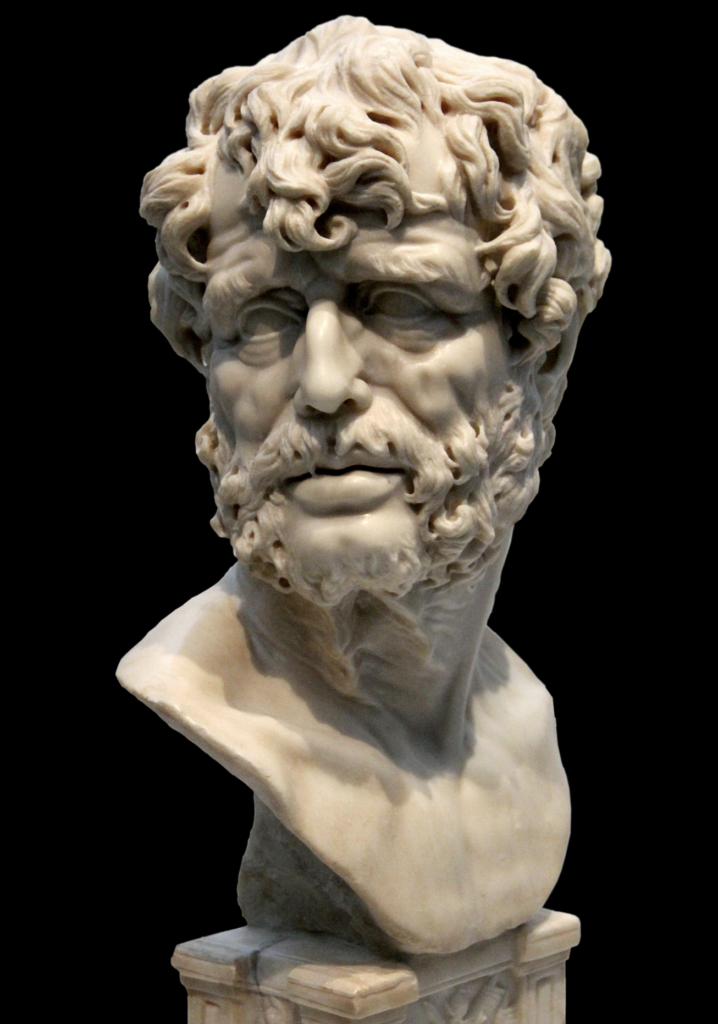
To live well, Seneca argued, is not a question of duration, but of use. Life is not inherently short; it is made so through neglect. We move through our days with the assumption of abundance, distributing our attention carelessly, as if time were a resource that could be recovered. Only in retrospect do we recognize its precision—finite, measured, and irreversible.
Writing in the first century, Seneca described a condition that remains strikingly familiar. People guard their wealth with vigilance, yet surrender their time without resistance. Hours are given to distraction, to obligation without reflection, to pursuits that dissolve as quickly as they arise. What is most valuable is treated as if it were expendable.
For Seneca, the art of living begins with recognition. To understand that time is limited is not a cause for urgency, but for discipline. It introduces the necessity of selection. What deserves attention? What sustains meaning? A life lived well is not one that contains everything, but one that excludes what is unnecessary.
This introduces a quieter understanding of luxury—one detached from accumulation. It is the ability to choose deliberately: to engage with depth rather than frequency, to value silence as much as activity, to resist the impulse toward constant occupation. In this framework, restraint is not deprivation, but refinement.
Seneca’s philosophy does not call for withdrawal, but for clarity. One may participate fully in the world—work, conversation, creation—but without surrendering autonomy over one’s time. The distinction lies in intention. Actions undertaken consciously acquire weight; those performed automatically dissolve into absence.
Central to his thinking is the question of presence. The past is fixed, the future uncertain; only the present offers substance. Yet most lives are spent elsewhere—caught in memory or anticipation, rarely grounded in the moment itself. To live well is to correct this imbalance, to inhabit time as it unfolds, rather than as it is imagined.
There is also, in Seneca’s writing, a subtle confrontation with mortality. Not as a source of fear, but as a measure. Awareness of an ending sharpens perception. It clarifies priorities. What remains is not the pursuit of more, but the pursuit of coherence—of aligning one’s actions with one’s values, one’s time with one’s intentions.
A well-lived life, then, is not defined by scale, but by structure. It is composed with care, shaped by decisions that accumulate into meaning. It is not rushed, yet not passive; not excessive, yet not diminished. It reflects an understanding that time, once given, defines the life itself.
In a culture that equates fullness with excess and speed with importance, Seneca offers a quieter measure. Life does not require expansion. It requires attention. It requires the discipline to distinguish between what matters and what merely occupies.
To live well is to treat time as one would treat something rare: with care, with intention, and without waste.